FASTER, SAFER AND MORE AFFORDABLE TRANSPORTATION
Transit is the beating heart of New Jersey, the lights of development follow our rail lines and highways up and down the state. We cannot continue to let our most critical assets of transit fall into disrepair and our limited green spaces fall to suburban sprawl. We must invest in fast, clean, affordable, and future ready transit to bring our state closer together at less cost.
The Beating Heart
NJT is the largest statewide transit agency in the United States, and the third largest by total ridership. The NJ Department of Transportation also oversees the Parkway and Turnpike covering 2400 miles of roadways throughout the state. The Port Authority of NY/NJ oversees operations at Newark Liberty Airport, the Ports of Newark and Bayonne, and the PATH train. All combined, New Jersey has the densest, and most redundant public transit network.
But it doesn't work for everyone.
What We’re Fighting For
We need a system that works for all, not just the NYC Commuter.
Last Mile Solutions
New Jersey’s biggest transit challenge isn’t just getting people onto trains and buses, it’s helping them reach those stations safely, affordably, and reliably. Last‑mile gaps are one of the top reasons residents default to driving, even when quality transit is available. These solutions close that gap and make transit a practical choice for more New Jerseyans.
Free Town Shuttles
Free local shuttles connect neighborhoods, seniors, and workers to NJ Transit stations and downtowns without adding more cars to already congested streets.
- Examples: Princeton’s FreeB community shuttle and the Edgewater Ferry Shuttle.
New Bus Routes
New or redesigned bus routes fill gaps between where people live and where transit actually runs, especially in job‑rich but transit-poor parts of suburban New Jersey like Parsippany.
- Examples: The NJT New Bus programs redoing bus routes across NJ.
Last‑Mile Share Programs
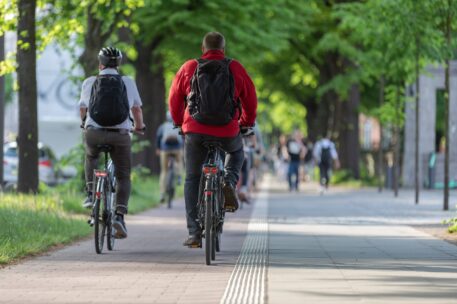
Bike, e‑bike, scooter, and carshare options make short trips to stations fast, affordable, and realistic in NJ’s dense towns and growing downtowns.
- Examples: Citi Bike’s expansion across Jersey City and Hoboken.
Complete Streets in NJ
Complete Streets redesigns New Jersey’s roads to be safer and more accessible for everyone adding crosswalks, bike lanes, traffic calming, and better transit access so people can move safely whether they walk, roll, bike, or ride. NJ’s safety and transit access depend heavily on local action, because the state controls only 7% of roadway miles. Most streets where people walk, bike, and wait for buses are local, not state‑owned.
- Hudson County Complete Streets Initiative (more to come)
JFK Blvd BRT Redesign
A Bus Rapid Transit redesign on JFK Boulevard would turn one of Hudson County’s busiest corridors into a faster, safer, and more reliable transit spine with dedicated lanes and upgraded stops.
Light Rail
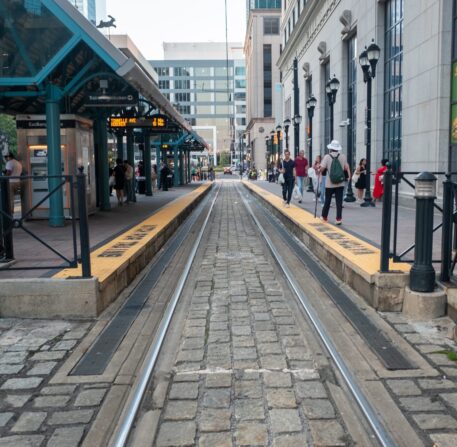
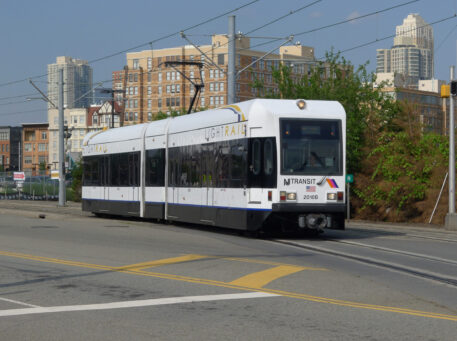
It connects neighborhoods, job centers, and downtowns with frequent service that people can actually walk to. It reduces traffic by giving residents a real alternative to short car trips, which make up most travel in the state. And every corridor that’s built or expanded delivers safer streets, stronger local economies, and more equitable access to opportunity.
Glassboro–Camden Line
The Glassboro–Camden Line would bring fast, reliable rail service to Gloucester and Camden counties, connecting growing suburbs to Camden and Philadelphia without adding highway traffic.
- The 18‑mile diesel light rail proposal linking Glassboro, Pitman, and Camden.
Hudson‑Bergen Light Rail (HBLR)
Expanding the HBLR would extend high‑frequency, zero‑transfer service deeper into Hudson County and Bergen County, connecting dense neighborhoods to PATH, ferries, and regional rail.
- The planned HBLR Northern Branch extension to Englewood.
River Line
Upgrades and extensions to the River Line would strengthen transit along the Delaware River corridor, improving access between Trenton, Burlington County towns, and Camden.
- The River Line’s ongoing fleet modernization and proposed connection to the Glassboro–Camden Line
Revenue & Development for NJT
A Stable Future Beyond the Corporate Transit Fee
The temporary corporate transit fee won’t sustain NJ Transit long‑term. New Jersey needs a durable revenue model that doesn’t rely on short‑term patches.
Fare Hikes Are Not a Real Strategy
Raising fares shifts the burden onto riders and still doesn’t fix structural deficits. A stable system requires funding that grows with the economy, not with ticket prices.
Value‑Capture Zones
Transit improvements raise nearby property values, in turn value‑capture zones reinvest a portion of that growth back into the system. This creates predictable revenue without raising taxes or fares.
Targeted, Not Blanket, Transit‑Oriented Development (TOD)
Transit Oriented Development boosts ridership and local tax bases when focused on walkable, transit‑rich corridors.
- Location
Reusing Existing Infrastructure
Reusing existing infrastructure is one of the most cost‑effective and environmentally friendly ways to expand transit because it avoids the high price and long timelines of building entirely new corridors. It also speeds up delivery, letting communities see real mobility improvements in years instead of decades.When done well, it turns underused or abandoned assets into high‑ridership, high‑impact transit that strengthens neighborhoods and connects more people to opportunity.
Reusing Existing Infrastructure
Bus Rapid Transit (BRT) on Existing Corridors
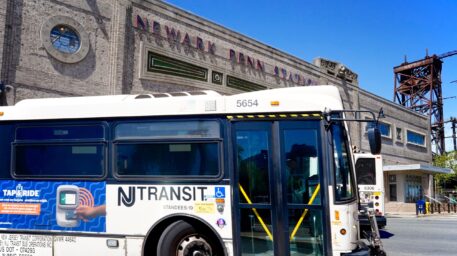
New Jersey can deliver faster, high‑capacity transit by converting wide, auto‑oriented corridors into BRT routes with dedicated lanes, upgraded stops, and signal priority instead of building new rail from scratch.
- Transforming Route 440 in Jersey City into a BRT corridor.
Reactivating Rail Lines
Reactivating dormant or underused rail corridors lets New Jersey restore fast, reliable service to growing communities at a fraction of the cost and time of new construction.
- Restoring service on the Northern Branch and West Trenton Line.
Other Priorities
PATH Upgrades
PATH is rebuilding and modernizing stations, tunnels, and power systems damaged by Superstorm Sandy to create a more resilient, reliable trans‑Hudson system for the long term.
- The ongoing rehabilitation of the Uptown Hudson Tubes between Hoboken and Manhattan.
Long‑Term Interagency Cooperation
PATH’s future depends on deeper coordination with NJ Transit, Amtrak, and regional planners to align schedules, share data, and plan capacity so the entire cross‑Hudson network works as one system.
- Port Authority participation in the Gateway Program partnership.
- Princeton’s FreeB community shuttle. Edgewater Ferry Shuttle.
- The NJT New Bus programs redoing bus routes across NJ.
- Citi Bike’s expansion across Jersey City and Hoboken.
- Complete Streets in NJ.
- The 18‑mile diesel light rail proposal linking Glassboro, Pitman, and Camden.
- The planned HBLR Northern Branch extension to Englewood.
- The River Line’s ongoing fleet modernization and proposed connection to the Glassboro–Camden Line
- The ongoing rehabilitation of the Uptown Hudson Tubes between Hoboken and Manhattan.
- Port Authority participation in the Gateway Program partnership.
- Transforming Route 440 in Jersey City into a BRT corridor.
- Restoring service on the Northern Branch or West Trenton Line.