Build Communities, Not Data Centers
The AI Problem
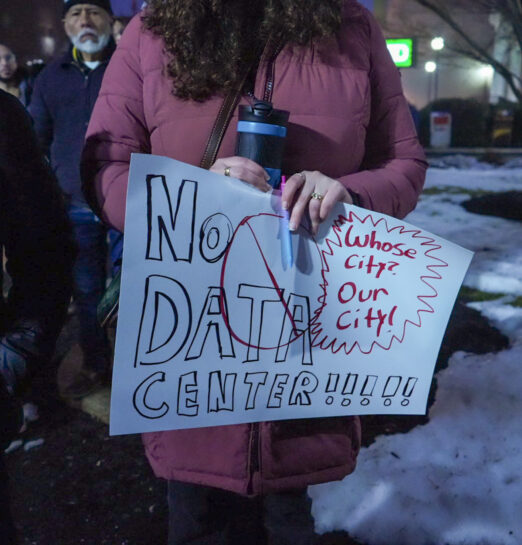
Big tech is going all in on AI, and communities are already feeling the consequences. AI data centers are raising our bills, polluting our environment, and disturbing our communities. Meanwhile, the billionaires and private equity firms behind AI are using it to undermine our institutions at every corner.
Our state lawmakers must take immediate action to protect New Jersey from the dangers of AI.
A BIT ABOUT DATA CENTERS
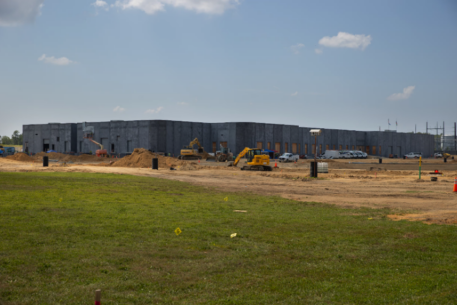
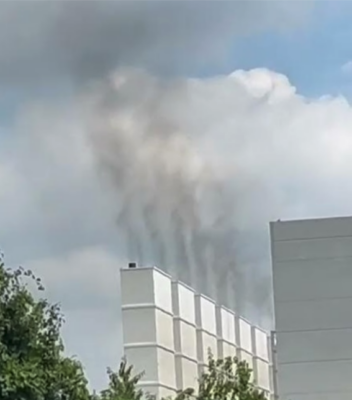
You’ve probably seen a data center before, even if you didn’t realize it. From the outside, they look like big windowless warehouses. But inside, they’re filled with thousands of servers capable of making trillions of calculations a second.
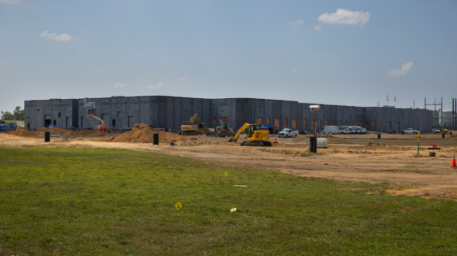
(outside)
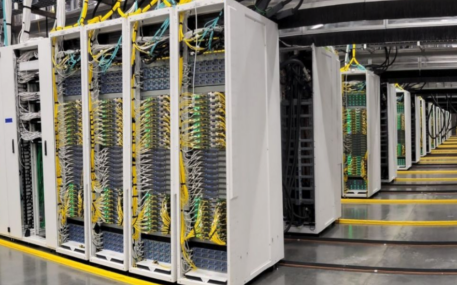
(inside)
Data centers have existed since the 1950s, and have generally been harmless. But AI is changing that. Big tech companies are racing to the AI market by building “hyperscale” data centers. These facilities are far larger than traditional data centers and consume much more energy. Right now, these AI data centers are appearing across New Jersey— and it’s causing the entire country serious problems.
View our NJ Data Center Map
If you know of a proposed data center in New Jersey that is not shown on this map, email energy@climaterevolutionnj.org and our data team will review it and add it immediately.
THE ISSUES WITH DATA CENTERS
Tech companies promise that AI will transform our workforce and economy for the better. But that’s not what we’re experiencing. Instead, they’re raising bills, disrupting communities, and damaging our environment.
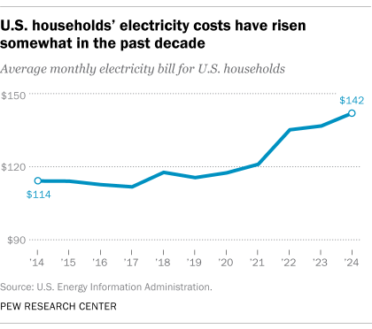
DATA CENTERS RAISE OUR ENERGY BILLS
Our power bills are 20-30% higher this year, and it’s because of AI’s obscene energy usage.
The average AI data center consumes the energy equivalent of 100,000 households. Some of the larger AI data centers under construction will consume the energy equivalent of 2,000,000 households. And hundreds of these data centers are appearing across the country, devouring our power supply. This is why power bills have gone up— we’re paying higher bills to accommodate AI data centers in our grid.
Data Centers Hurt Our Communities
When a data center enters a community, it causes problems.
Communities near data centers often see the highest bill increases. In areas with significant data center activity, some residents paid 80% more for electricity. Data centers can also make loud humming sounds that ring through neighborhoods, disrupting residents and animals. On top of this, data centers use tons of water. Depending on the size, a data center can use between 300,000 and 5,000,000 gallons of water a day, comparable to the water use of entire towns. This can easily overwhelm local water infrastructure.
For all the damage they cause, data centers give little back to their communities— data centers create the lowest number of jobs per square foot of any industrial facility.
https://www.ipm.org/news/2025-07-22/protesters-say-planned-monrovia-data-center-exploits-residents
Data Centers Cause Pollution
Data centers emit toxic air pollution every time they use their backup diesel generators or by using fossil fuel powered energy from the grid. This pollution is known to give people lung cancer, heart disease, and asthma. Normally, there are regulations that limit how long a diesel generator is allowed to run. But these limits don’t apply to emergencies. This means data centers will break air quality regulations during grid emergencies— which climate change is making more common.
Data centers can also create thermal pollution. The cooling systems used by most data centers transfers heat out of the data center into nearby bodies of water which is called thermal pollution. This heat lowers dissolved oxygen levels, which puts stress on aquatic life and increases the risk of aquatic “dead zones.”
The AI Data Center Boom is Being Driven by Financial Speculation
AI and data center expansion is a major driver of financial speculation.
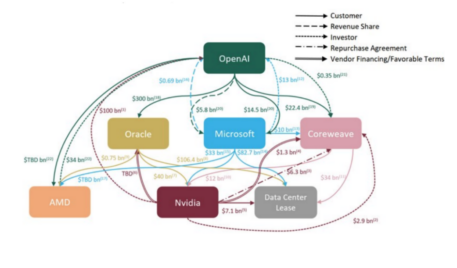
Private equity firms and tech giants are pouring billions into AI and data infrastructure bets, often investing in one another and inflating demand projections. The result is a rapid buildout that is moving faster than real public need.
Major financial hubs like New Jersey are now in the crosshairs because of our grid access, dense infrastructure, and proximity to capital markets in New York City. Communities are being asked to absorb the long term energy, water, and land use impacts of what may ultimately prove to be a short term financial bubble. If guardrails are not put in place now, ratepayers and local residents will be left carrying the costs long after investors move on.
https://www.ipm.org/news/2025-07-22/protesters-say-planned-monrovia-data-center-exploits-residents
BIG TECH DOES NOT CARE ABOUT US
The tech billionaires behind AI do not care about us. Their words and actions make that clear:





Lets Be Clear:
These billionaires are not interested in using AI to help us. To them, AI is just another tool to accumulate money and power. These same companies are now driving unprecedented demand for energy, water, and land in communities across New Jersey.
New Jersey Needs to Protect Itself From the Dangers of AI
It’s irresponsible to bet our future on this unpredictable and dangerous technology. AI needs guardrails — and it’s up to our state lawmakers to make them.
https://www.ipm.org/news/2025-07-22/protesters-say-planned-monrovia-data-center-exploits-residents
BILLS WE SUPPORT
State Wide Moratorium
Establishes a two-year statewide moratorium on the construction of new data centers over 25 megawatts while the New Jersey Department of Environmental Protection studies the environmental impacts of data center development across the state.
Data Center Tracker
Requires data centers to submit an annual report to DEP and requires DEP to establish a Data Center Transparency Dashboard.
AI Accountability Act
"GAI Accountability Act;" imposes civil penalties on generative artificial intelligence platforms engaging in harmful activity, including exploitation of children.
AI Image Disclosure Act
AI Image Disclosure Act"; creates a disclosure for certain AI-generated content.
AI Likeness Protection Act
"AI Likeness Protection Act" creates protections for distributing realistic representation of individual's image, likeness, or voice created using generative artificial intelligence.
OTHER POLICIES WE SUPPORT
Holding Big Tech Accountable
We support common sense safety regulations for AI. Right now, tech companies are releasing AI without sufficient safety features, and then rolling it back when it goes wrong. They constantly ask for forgiveness, and never for permission. To stop this, we need safety standards for AI. These standards should be enforceable; If a company ignores the rules, they must be held accountable.
Passing Local Municipal Ordinances Banning Data Centers
Data centers can do real damage to our communities. That’s why we believe community members should have a say in whether a data center gets built in their backyard. Luckily, anyone can fight against data centers by going to their local representatives.
Town councils have the power to guide local policy. By bringing our model resolution against data centers to your town council meeting, you can start the fight in your community.
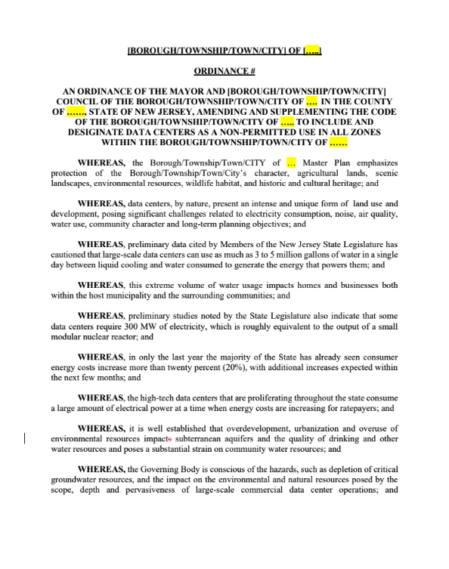
But the work doesn’t stop there, and we want to help you every step of the way. Contact us at info@climaterevolutionnj.org so we can join you in the fight.